
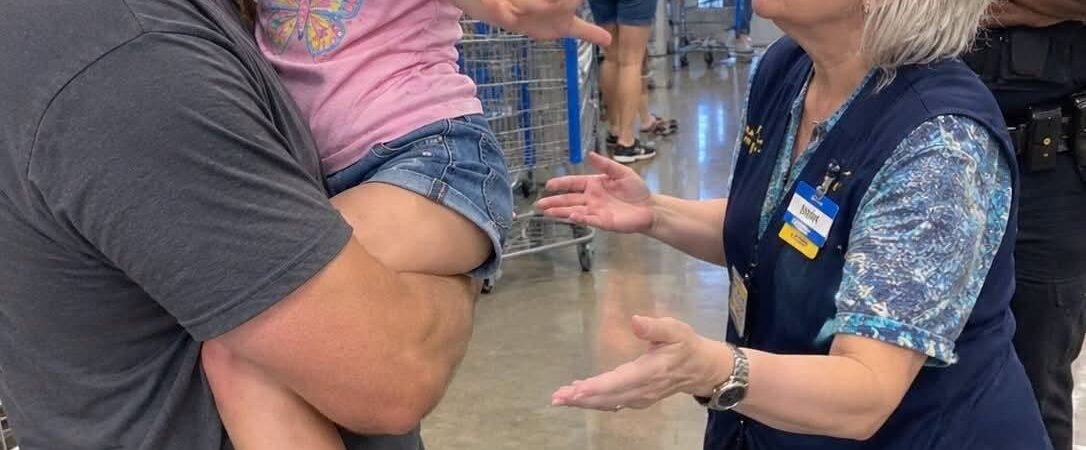
I’m 67 and Work at a Retail Store — When a Terrified Three-Year-Old Screamed at the Man Carrying Him, I Knew Something Was Wrong
At 67 years old, I thought I had seen almost everything life could possibly show me.
After spending decades working, raising a family, dealing with difficult people, and witnessing countless unexpected situations, I had learned not to jump to conclusions. Working at the customer greeting desk of a large retail store had taught me patience, observation, and the importance of treating everyone with kindness.
Every day, I stood near the entrance, welcoming customers with a smile.
Some people came in looking for groceries. Others were shopping for clothes, household supplies, or simply escaping the weather outside. Most days were ordinary, filled with familiar faces and routine conversations.
But one afternoon changed the way I looked at strangers forever.
It began like any other weekday.
The store was moderately busy. Parents were shopping with their children, employees were restocking shelves, and the checkout lines were moving steadily. I was standing near the entrance when I noticed a man walking toward the exit.
He was carrying a small child in his arms.
At first, nothing seemed unusual. Parents and caregivers carried tired children through the store all the time. The little boy appeared to be around three years old. He was wearing a blue jacket, tiny sneakers, and dark trousers.
However, something about his behavior immediately caught my attention.
He was crying.
Not the ordinary crying of a tired toddler who wanted a toy or a snack. His cries sounded desperate. His little hands were moving frantically, and he was struggling against the man’s arms.
Then I heard him scream something that made me stop breathing for a moment.
“You…!”
The child couldn’t finish his sentence.
He buried his face against the man’s shoulder, then lifted his head and began screaming again.
“You! No! No!”
The man tightened his grip around him.
“He’s just having a tantrum,” the man said quickly, almost before anyone had asked him a question.
I looked at the little boy.
His eyes were filled with tears. His face was red, and he was shaking. He kept looking toward the people around him as though he desperately wanted someone to understand what he was trying to say.
I had worked in retail for many years. I knew that children sometimes became overwhelmed in crowded places. But this felt different.
Something wasn’t right.
I took a step closer.
“Excuse me, sir,” I said calmly. “Is everything okay?”
The man looked at me with irritation.
“Yes. He’s tired. We’re leaving.”
I nodded politely, but I didn’t move out of his way.
“Poor little thing. What’s his name?”
The man hesitated for a second.
“Daniel.”
I smiled gently toward the child.
“Hello, Daniel. Can you tell me what’s wrong?”
The boy immediately began crying harder.
“Don’t let him!”
Those four words changed everything.
The man’s expression shifted.
“That’s enough,” he snapped. “Move aside.”
Several customers had begun watching us. A woman standing near the shopping carts stopped pushing hers. An employee carrying a box of merchandise looked in our direction.
I felt my heart beating faster.
I was not a police officer. I was not a security guard. I was simply a 67-year-old employee working at the front of a store.
But I knew I couldn’t ignore what I had just heard.
I stepped slightly to the side and quietly signaled to my colleague to contact store security.
The man noticed.
“What are you doing?” he demanded.
“Just making sure everything is okay,” I replied.
He turned toward the exit again.
That was when the little boy reached one trembling hand toward me.
“Please!”
I will never forget that moment.
His tiny fingers stretched toward mine, and his eyes seemed to be asking a question no three-year-old should ever have to ask a stranger.
I gently held his hand for a second.
“It’s okay, sweetheart. We’re going to make sure you’re safe.”
The man immediately pulled him away.
“Don’t touch my child!”
I stepped back, keeping my voice calm.
“Of course. I don’t want to upset him. Let’s just wait for security.”
The man’s face turned red.
“He’s my son! You have no right to stop me!”
I understood that he was angry, but I also understood that allowing him to leave without checking the situation could be dangerous.
Within a few minutes, two security employees arrived.
One stood near the exit while the other approached us.
“Sir, could you please wait a moment?” the security supervisor asked.
The man became increasingly agitated.
“Why? I’ve done nothing wrong!”
The supervisor explained that a concern had been raised about the child’s distress and that they needed to follow store procedures.
The little boy was still crying.
Then something unexpected happened.
A woman who had been shopping nearby approached us.
“I think I’ve seen this child before,” she said hesitantly.
Everyone turned toward her.
She explained that she lived in a nearby apartment complex and had occasionally seen a little boy who looked similar playing with a woman outside.
“I’m not completely sure,” she admitted. “But I think his name might be Daniel.”
The man immediately interrupted.
“That’s enough. We’re leaving.”
The security supervisor asked him to remain while they contacted the appropriate authorities.
The situation was becoming serious.
I moved away from the confrontation and called the store manager. We needed to make sure everything was documented properly, including the child’s exact words and the man’s behavior.
A few minutes later, the manager arrived.
He spoke calmly to the man and explained that the store was taking the child’s distress seriously.
The man continued insisting that he was the child’s father and that the boy was simply misbehaving.
But nobody could ignore the little boy’s repeated pleas.
Eventually, the police were contacted.
While we waited, one of the female employees brought a small bottle of water and a soft toy from the children’s section. She placed them nearby without forcing the child to take anything.
The boy slowly reached for the toy.
For the first time since I had noticed him, his crying became quieter.
I stood nearby, hoping that the next few minutes would bring some answers.
When the officers arrived, they separated the adults from the immediate situation and began asking questions. They requested identification and information about the child’s family.
The man appeared increasingly nervous.
He gave several explanations, but the officers needed to verify the details rather than rely on anyone’s claims.
One officer spoke gently to the child.
“What’s your name, buddy?”
“Daniel,” he whispered.
“Do you know this man?”
The boy looked down.
He didn’t answer immediately.
Then he quietly said something that made the officer exchange a glance with his colleague.
I couldn’t hear every word, but I could see that the officers were taking the matter seriously.
They began making calls to verify the child’s identity and locate his legal guardian.
The store manager asked me to write down everything I had witnessed.
I described the time the man entered the area, the child’s appearance, the exact words I remembered, and the man’s reaction when I approached him.
I made sure not to add assumptions or exaggerate anything.
As an older employee, I had learned that accurate details mattered more than dramatic stories.
About twenty minutes later, the officers received information that helped clarify the situation.
The child had been reported missing by a family member.
The person who had been carrying him was not his father.
I felt my knees weaken.
For several seconds, I couldn’t speak.
The officers continued handling the situation, and additional information was obtained to establish what had happened. The man was taken aside for further questioning.
The little boy was placed under the care of the appropriate authorities while his family was contacted.
When his mother finally arrived, she was visibly shaken.
The moment she saw him, she rushed forward and called his name.
“Daniel!”
The little boy recognized her immediately.
He reached out with both arms, and she held him tightly.
She was crying so hard that she could barely speak.
I stood a few feet away, watching them reunite.
The mother eventually approached me.
“Thank you,” she whispered.
I shook my head.
“Please don’t thank me. I’m just glad he’s safe.”
She explained that the family had been searching desperately and that they had contacted the authorities when they realized the child was missing.
The officers continued their investigation, and the family was given instructions about the next steps.
I never learned every detail of what happened afterward.
And perhaps I didn’t need to.
What mattered was that a frightened little boy had been noticed before the situation became even worse.
That evening, after my shift ended, I sat in my car for several minutes before driving home.
My hands were still trembling.
I kept remembering his tiny fingers reaching toward me.
I thought about how easily I could have dismissed his crying as an ordinary tantrum.
I thought about how many people had walked past us before someone finally stopped to pay attention.
And I thought about something my mother used to tell me when I was young:
“Sometimes doing the right thing begins with simply noticing that something is wrong.”
The following morning, my store manager thanked the employees who had helped respond to the incident. He reminded everyone that customer safety, especially children’s safety, must always be taken seriously.
We were encouraged to follow established procedures, involve security, and contact emergency services whenever a child appeared to be in immediate danger.
I returned to my usual position near the entrance.
The automatic doors opened and closed. Customers walked in carrying shopping bags. Children ran toward the toy section, and parents reminded them to stay close.
Everything looked normal again.
But I was different.
At 67, I had learned that courage doesn’t always look like something extraordinary.
Sometimes it looks like an elderly woman asking one simple question.
Sometimes it means refusing to ignore a frightened child’s voice.
And sometimes, the smallest decision to pay attention can make an enormous difference.
I still work at that store, greeting customers with the same smile I have offered for years.
But whenever I see a small child looking frightened, I pay a little closer attention.
Not because every crying child is in danger.
Not because every stranger should be treated with suspicion.
But because children deserve to be heard, protected, and taken seriously.
And if there is one thing that afternoon taught me, it is this:
Never underestimate the importance of listening when a child is trying to tell you something.
You may not know the whole story. You may not have all the answers. But you can take a concern seriously, get the right people involved, and help ensure that a vulnerable child receives the protection they need.
At 67, I thought my most important lessons were already behind me.
That afternoon reminded me that some of life’s most meaningful lessons arrive when we least expect them.