
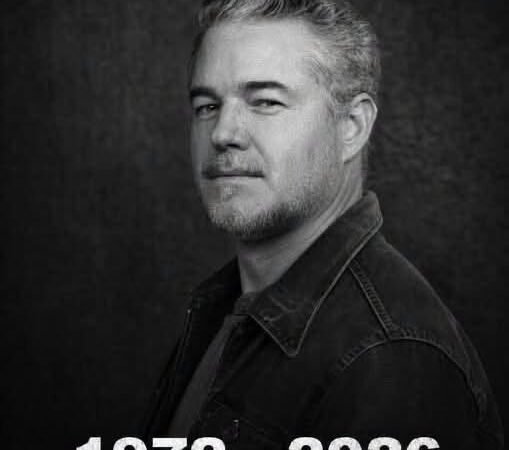
For years, Eric Dane was known to millions of television viewers as the charming, confident, and unforgettable Dr. Mark Sloan from the popular medical drama Grey’s Anatomy. His smile, screen presence, and natural acting ability helped him become one of the most recognizable faces on television. However, behind the Hollywood success, memorable performances, and celebrity lifestyle was a man whose personal journey would eventually become much more meaningful than the characters he portrayed.
Eric Dane’s story is one of ambition, patience, professional achievement, and unexpected challenges. From his early days as an aspiring actor in California to becoming an internationally recognized television star, he spent decades building a career in an industry where success is never guaranteed. Yet, one of the most significant chapters of his life began when he shared news about his health in 2025.
His announcement that he had been diagnosed with amyotrophic lateral sclerosis (ALS), a progressive neurological disease, brought a different kind of attention to his life. Suddenly, audiences were looking beyond his Hollywood achievements and recognizing the personal courage required to face such a difficult diagnosis.
His journey became a powerful reminder that life can change without warning and that a person’s legacy is not always defined by professional success. Sometimes, it is defined by the way they respond when circumstances become difficult.
The Early Years: A Young Man With Big Dreams
Before becoming a familiar name in Hollywood, Eric Dane was an aspiring actor trying to find his place in the entertainment industry.
Born on November 9, 1972, in San Francisco, California, Dane developed an interest in acting during his younger years. Like many people who dream of working in Hollywood, he faced the uncertainty that comes with pursuing a creative profession. Becoming a successful actor requires more than talent. It demands patience, determination, discipline, and the willingness to face rejection.
Dane began exploring acting opportunities during the 1990s. His early career involved smaller television appearances, giving him opportunities to understand the demands of professional acting and develop his skills.
These early experiences were important because they allowed him to build a foundation before receiving the opportunities that would eventually transform his career.
The entertainment industry can be especially challenging for actors who are still trying to establish themselves. Competition is intense, roles are limited, and even talented performers can spend years waiting for the right opportunity.
Dane continued working, gradually gaining experience and becoming more comfortable in front of the camera.
His journey was not an overnight success story. Instead, it reflected the kind of persistence that often separates those who continue pursuing their dreams from those who eventually walk away.
The Breakthrough That Changed Everything: Grey’s Anatomy
The year 2006 became one of the most important turning points in Eric Dane’s professional life.
He joined the cast of Grey’s Anatomy, the medical drama that had already developed a loyal international audience. His character, Dr. Mark Sloan, quickly became one of the show’s most recognizable personalities.
Nicknamed “McSteamy” by viewers and characters within the series, Mark Sloan was introduced as a confident and charismatic plastic surgeon. His appearance, personality, and complicated relationships immediately attracted attention.
However, the character was much more than an attractive television personality.
As the series developed, viewers discovered different sides of Mark Sloan. Beneath his confident exterior was a character capable of emotional vulnerability, friendship, loyalty, and personal growth.
This complexity helped make the character memorable.
Dane’s performance brought humor, charm, and emotional depth to the role. He developed an on-screen presence that made Mark Sloan an important part of the show’s identity.
For many viewers, his character became one of the main reasons they continued watching the series.
The success of Grey’s Anatomy also introduced Dane to a much larger international audience. People who had never heard his name before suddenly recognized him as McSteamy.
The role significantly expanded his professional opportunities and established him as a television star.
Why Mark Sloan Became Such a Memorable Character
Television audiences often connect with characters who feel entertaining as well as human. Mark Sloan was a good example of this combination.
Initially, his confidence and playful personality made him stand out. He was often humorous, occasionally arrogant, and comfortable with the attention he received.
However, the writers gradually revealed a more complicated personality.
His relationships with other characters demonstrated that he was capable of deep emotional connections. His friendship with Derek Shepherd, his complicated romantic history, and his evolving relationships within the hospital gave audiences opportunities to understand him beyond his reputation.
One of the most meaningful aspects of his storyline involved his relationship with his daughter, Sofia, and his growing understanding of responsibility.
These emotional developments helped transform him from a charming supporting character into someone audiences genuinely cared about.
Eric Dane’s performance contributed significantly to that transformation.
When a television character becomes popular, the actor behind the role often becomes closely associated with that personality. Dane experienced exactly that.
Even years after his departure from the series, many fans continued referring to him as McSteamy.
The character became an important part of television culture and remains one of the memorable personalities associated with Grey’s Anatomy.
Moving Beyond Grey’s Anatomy
Although Grey’s Anatomy established Eric Dane as a major television personality, he did not allow himself to become limited to one character.
Throughout his career, he explored different genres and acting opportunities.
One of his significant television projects was The Last Ship, a dramatic action series in which he portrayed Captain Tom Chandler.
The series presented a completely different kind of character from Mark Sloan.
Instead of playing a charismatic surgeon navigating complicated personal relationships, Dane portrayed a military commander facing extraordinary responsibilities during a global crisis.
His performance required a different emotional approach, including leadership, discipline, determination, and the ability to portray difficult decisions under pressure.
The series allowed audiences to see another dimension of his acting abilities.
It also demonstrated his willingness to take on demanding roles and move beyond the television identity that had originally made him famous.
For an actor, successfully transitioning between very different characters can be challenging. However, Dane continued building a varied professional portfolio.
A Darker Performance in Euphoria
Another important chapter in Eric Dane’s career came with HBO’s critically discussed drama Euphoria.
In the series, he portrayed Cal Jacobs, a complicated character whose personal life and relationships became central to several important storylines.
Cal was very different from the confident and entertaining Dr. Mark Sloan.
He was a deeply troubled individual dealing with personal secrets, family expectations, emotional conflicts, and the consequences of decisions made throughout his life.
The character required Dane to explore darker emotional territory.
His performance attracted attention because it revealed a different side of his abilities. Rather than relying on charm and humor, he portrayed a character whose internal struggles frequently affected the people around him.
Euphoria introduced him to another generation of viewers, particularly younger audiences who may not have followed his earlier television work.
The series also demonstrated that Dane was willing to accept roles that challenged audience expectations.
For an actor with a long career, this ability to reinvent himself can be especially valuable.
His Work in Hollywood Films
Eric Dane’s professional journey was not limited to television.
He also appeared in several films, including X-Men: The Last Stand, Marley & Me, and Bad Boys: Ride or Die.
These projects allowed him to work across different storytelling styles and share the screen with other established performers.
In X-Men: The Last Stand, he appeared as Jamie Madrox, also known as Multiple Man, a character from the popular Marvel universe.
His involvement in a major superhero production introduced him to audiences who enjoyed comic-book adaptations and action films.
In Marley & Me, he appeared in a story that explored family relationships, companionship, and the emotional connection between people and their pets.
His appearance in Bad Boys: Ride or Die later connected him with another major action-film franchise.
Each project contributed to a career that extended beyond the character that initially made him famous.
His filmography demonstrated versatility and an interest in exploring different types of entertainment.
The Personal Side of a Hollywood Career
While audiences generally see actors through their performances, their lives outside the camera are often much more complicated.
Eric Dane has experienced personal challenges alongside his professional achievements.
He has spoken publicly about aspects of his personal life, relationships, and struggles, reminding audiences that celebrity status does not protect anyone from difficult experiences.
For many years, viewers associated him with confidence, humor, and an effortless Hollywood presence.
However, the reality of life is rarely as simple as the image people see on television.
Like everyone else, actors face uncertainty, emotional difficulties, and situations they cannot always control.
This distinction became especially important when Dane eventually shared news about his health.
The 2025 Announcement That Changed Public Attention
In 2025, Eric Dane publicly revealed that he had been diagnosed with amyotrophic lateral sclerosis, commonly known as ALS.
The announcement brought widespread attention because ALS is a serious neurological condition that affects the nerve cells responsible for controlling voluntary muscles.
As the disease progresses, it can affect a person’s ability to walk, speak, swallow, and perform everyday physical activities.
There is currently no universally effective cure for ALS, although medical treatments, supportive care, and ongoing research offer ways to manage aspects of the condition and improve quality of life.
For someone whose professional career depends on physical performance, communication, and the ability to work on film and television sets, such a diagnosis presents extraordinary challenges.
The announcement was difficult news for fans who had followed Dane’s career for years.
Many people had watched him portray strong, confident, and energetic characters. Hearing that he was facing a progressive neurological disease created a powerful contrast between his familiar screen image and the reality of his personal circumstances.
However, Dane’s decision to speak publicly about his diagnosis also created an opportunity to bring greater awareness to ALS.
His story became part of a wider conversation about neurological diseases, medical research, accessibility, and the importance of supporting individuals and families affected by serious health conditions.
Understanding ALS and Its Impact
Amyotrophic lateral sclerosis is a progressive disease that affects motor neurons, the nerve cells responsible for sending signals from the brain and spinal cord to muscles.
As these nerve cells become damaged, the muscles gradually lose their ability to receive normal signals.
This can result in muscle weakness, difficulty with movement, and other physical challenges.
The progression of ALS varies from person to person. Not everyone experiences the same symptoms or develops complications at the same rate.
Some individuals initially experience weakness in their hands or legs, while others notice changes involving speech or swallowing.
As the condition progresses, everyday activities can become increasingly difficult.
Medical professionals may recommend different forms of treatment and supportive care depending on the individual’s needs.
These can include medication, physical therapy, occupational therapy, respiratory support, nutritional assistance, and communication devices.
Research into ALS continues around the world, with scientists investigating potential treatments, disease mechanisms, and ways to improve patient outcomes.
Public awareness is an important part of this effort because greater understanding can encourage research funding, improve access to support services, and help families recognize the challenges faced by people living with the condition.
By discussing his diagnosis publicly, Dane helped bring attention to a disease that many people may know very little about.
Choosing Honesty Instead of Silence
One of the most meaningful aspects of Eric Dane’s journey has been his willingness to discuss a deeply personal health challenge.
Receiving a serious medical diagnosis can be emotionally overwhelming.
People may experience fear, uncertainty, frustration, and questions about what the future will look like.
For public figures, these emotions can become even more complicated because personal information often attracts widespread attention.
There is pressure to respond to questions, manage public expectations, and decide how much of private life should become public knowledge.
Dane’s decision to share his diagnosis allowed people to understand that he was facing a challenge that extended far beyond his professional career.
His openness also helped challenge the idea that strength means pretending everything is fine.
Sometimes, strength involves acknowledging uncertainty and accepting support.
It can mean speaking honestly about difficult circumstances rather than hiding them.
It can also mean continuing to find meaning in relationships, creativity, and everyday experiences.
His story encouraged many fans to look at him not simply as a television celebrity but as a person navigating an extraordinary personal challenge.
The Importance of Family and Support
A serious illness does not affect only the person receiving the diagnosis.
It also influences family members, close friends, caregivers, and the people who provide emotional and practical support.
For individuals living with ALS, having a reliable support system can make a meaningful difference.
Family members may help coordinate medical appointments, assist with everyday activities, and provide emotional reassurance.
Healthcare professionals, support organizations, and patient communities can also play important roles.
For public figures, maintaining privacy while receiving support can be particularly important.
Although audiences may feel emotionally connected to celebrities, the details of their family lives and medical decisions remain personal.
It is important to respect those boundaries.
Eric Dane’s journey also reminds people that behind every familiar television personality is a network of relationships and responsibilities that may not be visible to the public.
Fame does not eliminate the need for love, understanding, and companionship.
A Career That Continues to Inspire Audiences
When looking back at Eric Dane’s career, it becomes clear that his professional achievements extend far beyond one television series.
He successfully moved from smaller acting opportunities to major television roles.
He became internationally recognized through Grey’s Anatomy, demonstrated his versatility in The Last Ship, explored darker storytelling in Euphoria, and appeared in major films.
Each chapter contributed something different to his professional identity.
For many viewers, he will always be Dr. Mark Sloan.
For others, he will be remembered as Captain Tom Chandler or Cal Jacobs.
The diversity of these performances demonstrates the range of characters he was able to bring to life.
However, his public health journey has added another dimension to the way audiences understand his story.
His experience has encouraged conversations about resilience, medical research, and the importance of recognizing people beyond their professional identities.
What His Story Teaches About Courage
Eric Dane’s experience highlights an important distinction between appearing strong and experiencing strength in real life.
On television, actors often portray characters who overcome extraordinary obstacles.
They face dangerous situations, make difficult decisions, and emerge victorious after moments of uncertainty.
Real life does not always offer such clear outcomes.
There are circumstances that cannot be controlled through determination alone.
A serious medical diagnosis is one of them.
Courage in these situations may look very different from the dramatic moments audiences see on television.
It may involve attending another medical appointment, accepting assistance, having difficult conversations, or simply finding the strength to face another day.
It can also mean using a public platform to help others understand an illness.
Dane’s decision to share his diagnosis has helped bring visibility to ALS and the experiences of those affected by it.
His story reminds audiences that people do not need to hide their struggles to deserve respect.
They do not need to appear fearless to demonstrate courage.
Sometimes, the most meaningful form of strength is simply being honest about what life has brought.
Looking Beyond the Hollywood Image
Celebrity culture often focuses on awards, appearances, box-office performances, television ratings, and professional achievements.
These things can make successful individuals appear almost untouchable.
But life outside the entertainment industry is much more complicated.
Actors, musicians, athletes, and other public figures experience the same fundamental uncertainties as everyone else.
They can face illness, family difficulties, financial pressure, and emotional challenges.
Eric Dane’s story illustrates this reality.
The actor who once entertained millions as the confident McSteamy is also an individual navigating a difficult health experience.
Recognizing this does not diminish his achievements. Instead, it provides a fuller understanding of his journey.
His career represents years of hard work and dedication.
His openness about ALS has added an important public-awareness dimension to his story.
Together, these experiences demonstrate that a person’s life cannot be reduced to their most famous role or their most difficult moment.
A Legacy Beyond the Screen
Eric Dane’s legacy will always include the characters he brought to life.
Mark Sloan remains an unforgettable part of Grey’s Anatomy. Captain Tom Chandler demonstrated his ability to lead a dramatic television series, while Cal Jacobs revealed his willingness to explore complicated and uncomfortable characters.
His film appearances also contributed to a career that reached audiences across different genres.
But a legacy is not created only through entertainment.
It can also develop through the conversations a person inspires, the awareness they help create, and the way their experiences encourage others to look at life differently.
His ALS diagnosis brought attention to a condition that deserves greater understanding and continued scientific research.
For people living with ALS and their families, visibility matters.
It can help reduce isolation, encourage conversations, and remind communities that individuals affected by serious diseases deserve dignity, support, and access to appropriate care.
Final Thoughts: More Than an Actor, A Story of Resilience
Eric Dane’s journey began with the dreams of a young actor hoping to establish himself in Hollywood.
Through patience, determination, and talent, he eventually became a familiar face to millions of people.
His portrayal of Dr. Mark Sloan changed his career, while later performances demonstrated that he was capable of much more than the charming personality audiences first came to know.
However, his ALS diagnosis in 2025 introduced a chapter that no television script could fully prepare someone to experience.
It changed the way many people viewed his journey and encouraged audiences to think about the meaning of courage, vulnerability, and resilience.
His story is not simply about a celebrity facing a serious illness. It is also about the importance of living with honesty, appreciating relationships, supporting medical research, and recognizing the humanity behind public personalities.
Hollywood may remember Eric Dane for his unforgettable performances, but many people will also remember his willingness to bring attention to a difficult disease.
Ultimately, his journey reminds us that life is unpredictable. Success cannot guarantee protection from hardship, and fame cannot prevent unexpected challenges.
What matters is how we value our time, how we support one another, and how we continue finding meaning even when life takes an unexpected turn.
Eric Dane’s career gave audiences countless memorable moments on screen. His personal journey has offered something different: an opportunity to reflect on courage, compassion, and the strength it takes to face an uncertain future.
And perhaps that is what makes his story meaningful beyond Hollywood.